
Holistic Wellness App UX Redesign
WellMind is a wellness platform created to help people manage stress, anxiety, sleep issues, and overall mental load.
The goal was to design the product from the ground up, with no existing app, no design system, and no user baseline to rely on.
My role was to give shape to the entire experience. working from research to wireframes to high fidelity mobile and web designs.
The mission was to build a calm, supportive, and clear product that users can trust from day one.
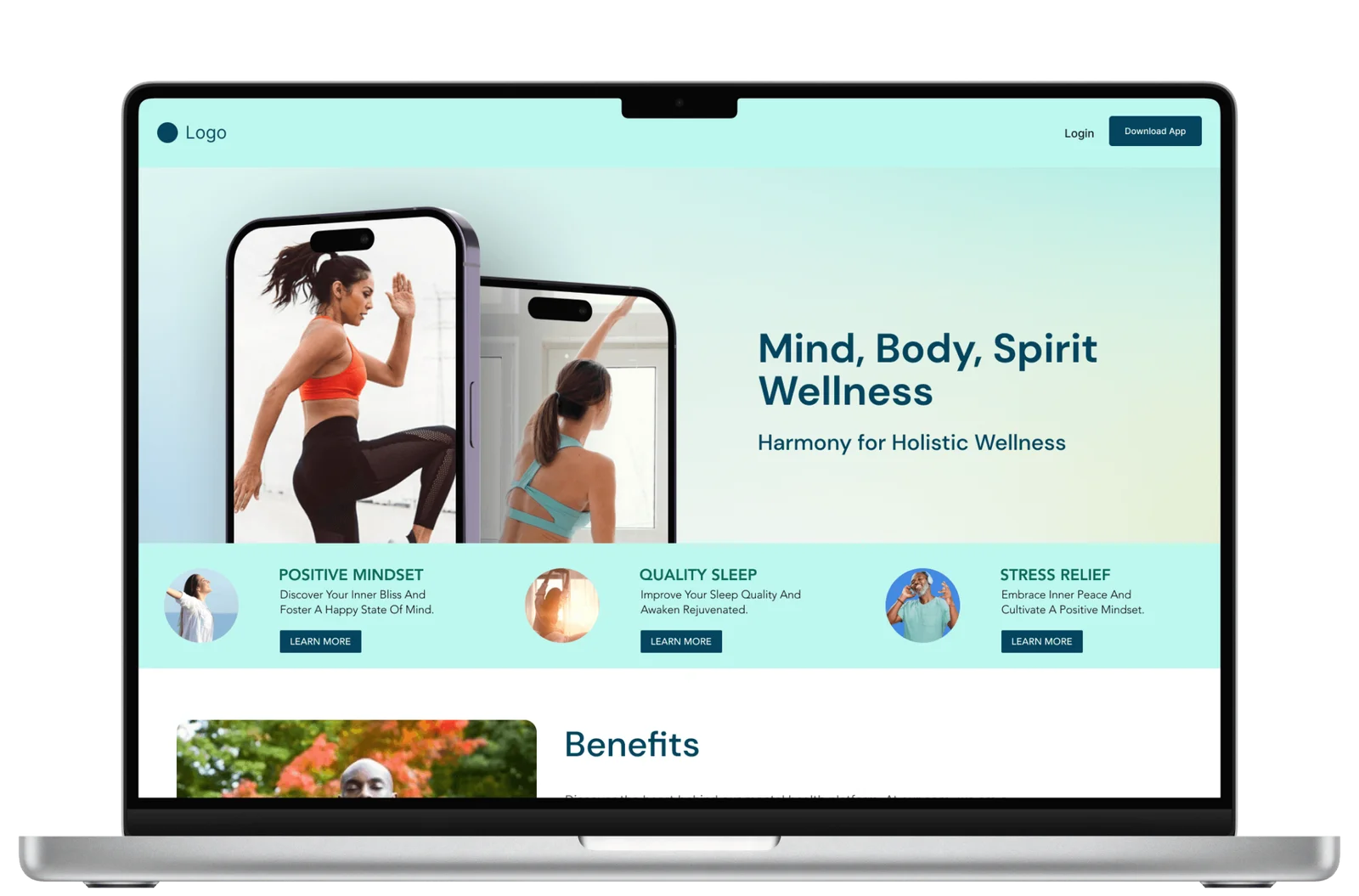
UX Designer
Website & App Design
Wellness. B2C
End to end UX and UI for the mobile app and responsive site. Wireframes. user flows, prototypes, high fidelity mockups, accessibility first design.
UX research, IA, UI design
WellMind is a new wellness platform built from scratch for people dealing with stress. sleep issues. and daily overload. There was no existing app or UX to improve. so every screen, flow, and system had to be defined from the ground up.
My goal was to design a calm, simple, and supportive experience that helps users find the right tools fast and stay engaged.
Challenge
Early research revealed three core gaps in user expectations. Heavy content blocks, unclear categories, and scattered paths made it hard for people to know where to start. This led to drop offs at two points:
• Onboarding
• First time feature exploration
Interviews and personas pointed to one clear pattern. Users wanted fewer choices and faster direction, not more features.
Results
Early user tests showed clear behavior improvements in the first version.
30%
Users reached key content faster because the hierarchy was clear.
25%
Navigation errors dropped because the structure was simple.
18%
Clear call to action increased early engagement.
WellMind. A Holistic Wellness Platform
(Name changed for privacy)
WellMind was created at a time when wellness needs were rising. After the pandemic, people were dealing with higher stress, interrupted sleep, and a search for tools that did not overwhelm them.
This project began with no screens, no content model, and no design history.
Everything had to be built from scratch based on real behaviour patterns and modern wellness expectations.
My approach was clear.
Understand the user’s headspace first, then design the product around it.
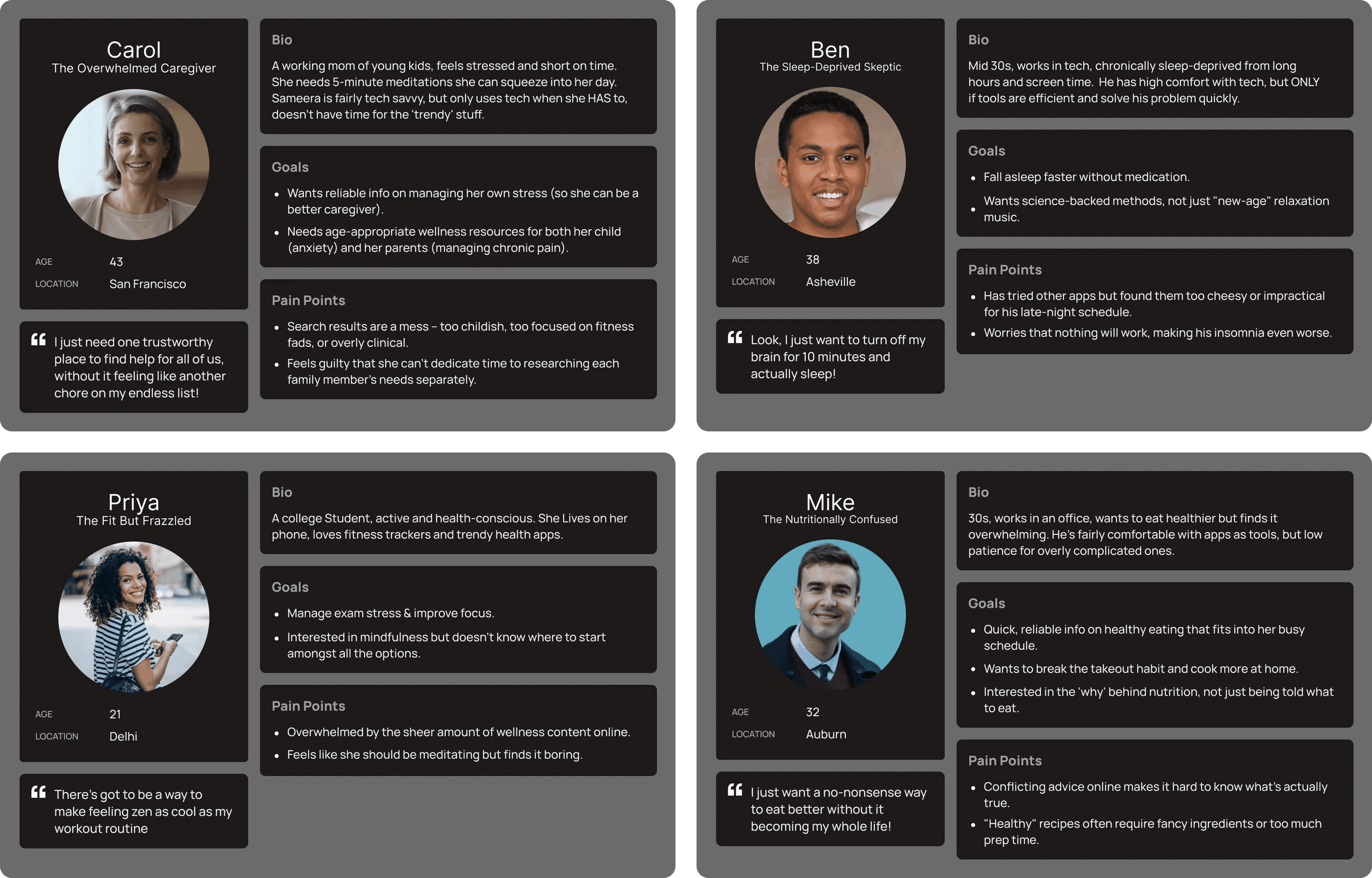
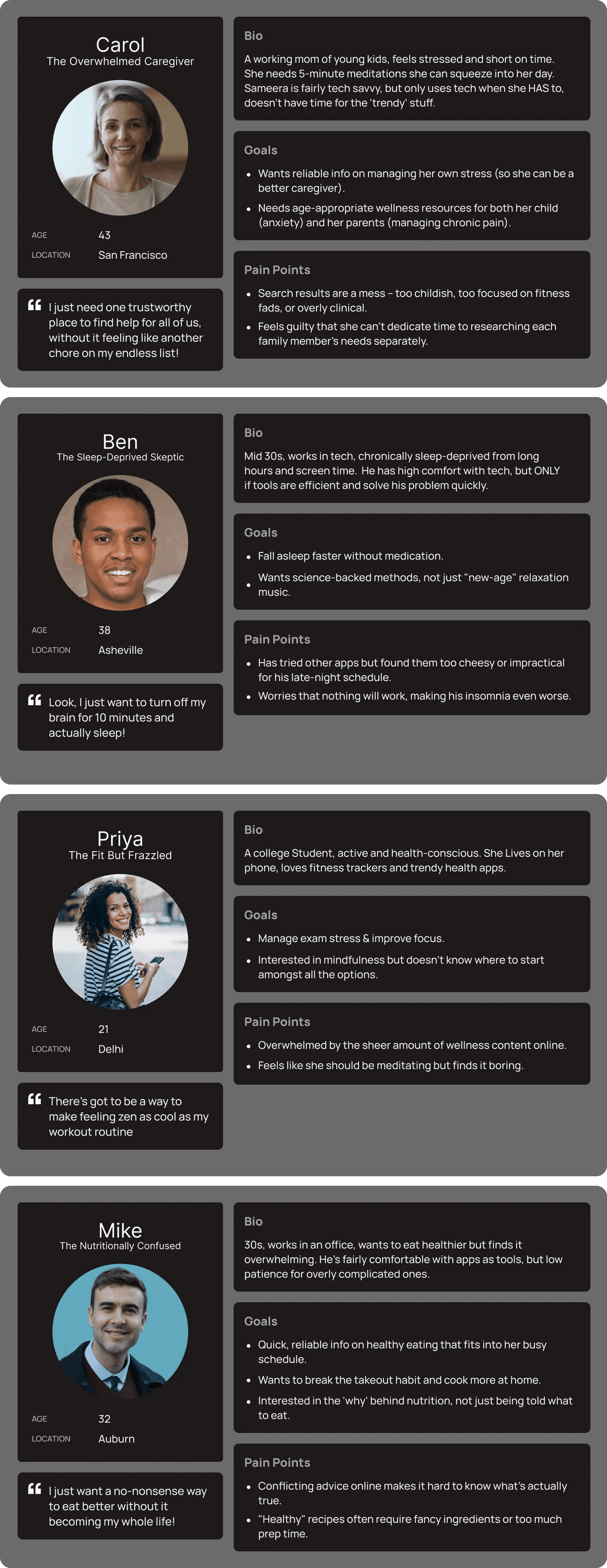
Audience Personas
Personas were crafted to reflect real stress patterns, lifestyle pressure, and energy levels. They shaped tone, navigation depth, and the role of simplicity in decision making.
User Journey Map
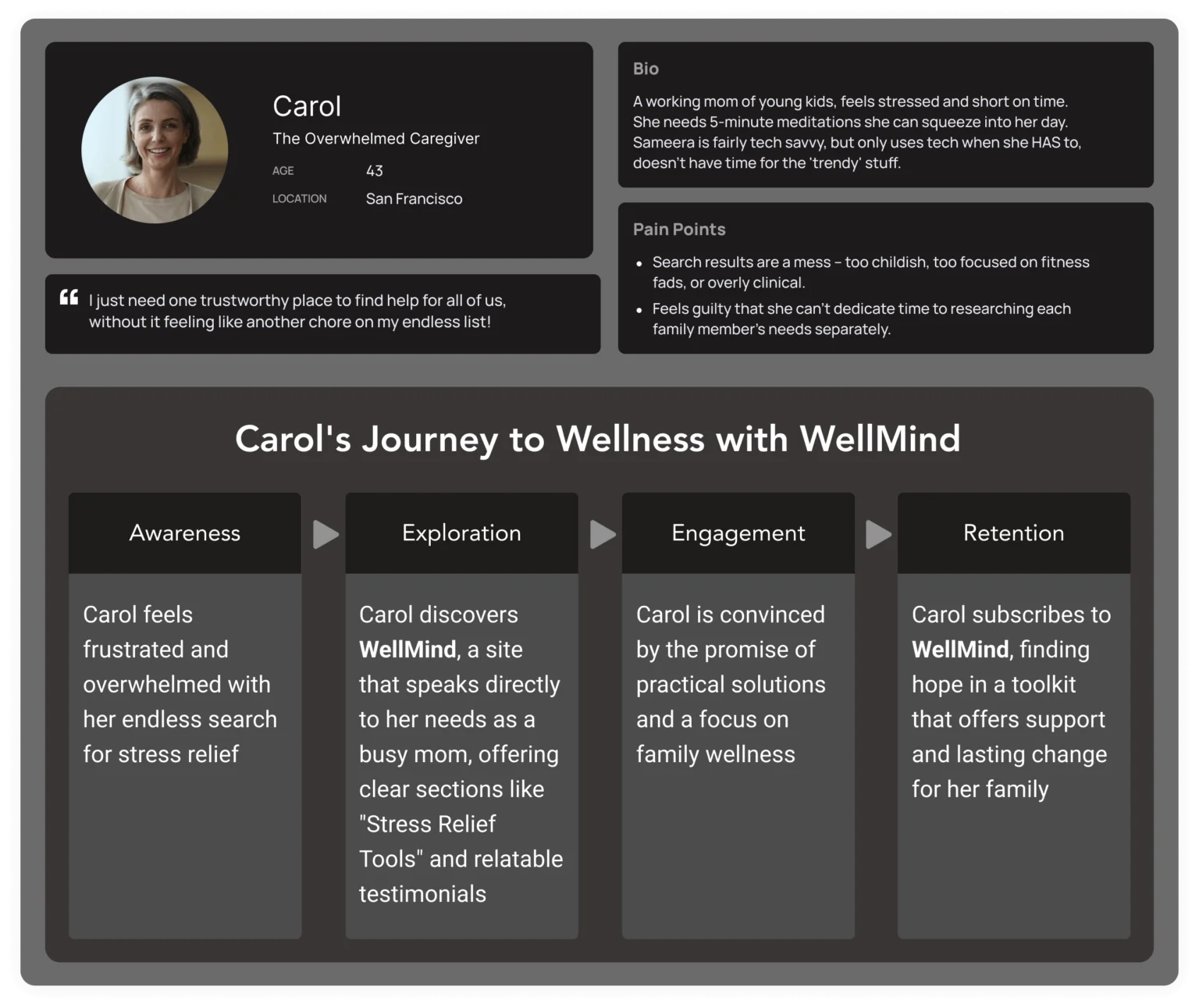
The journey mapped four stages: Awareness, Exploration, Engagement, and Retention.
This shaped a guided flow where users always know their next step without feeling pushed.
Competitive Landscape
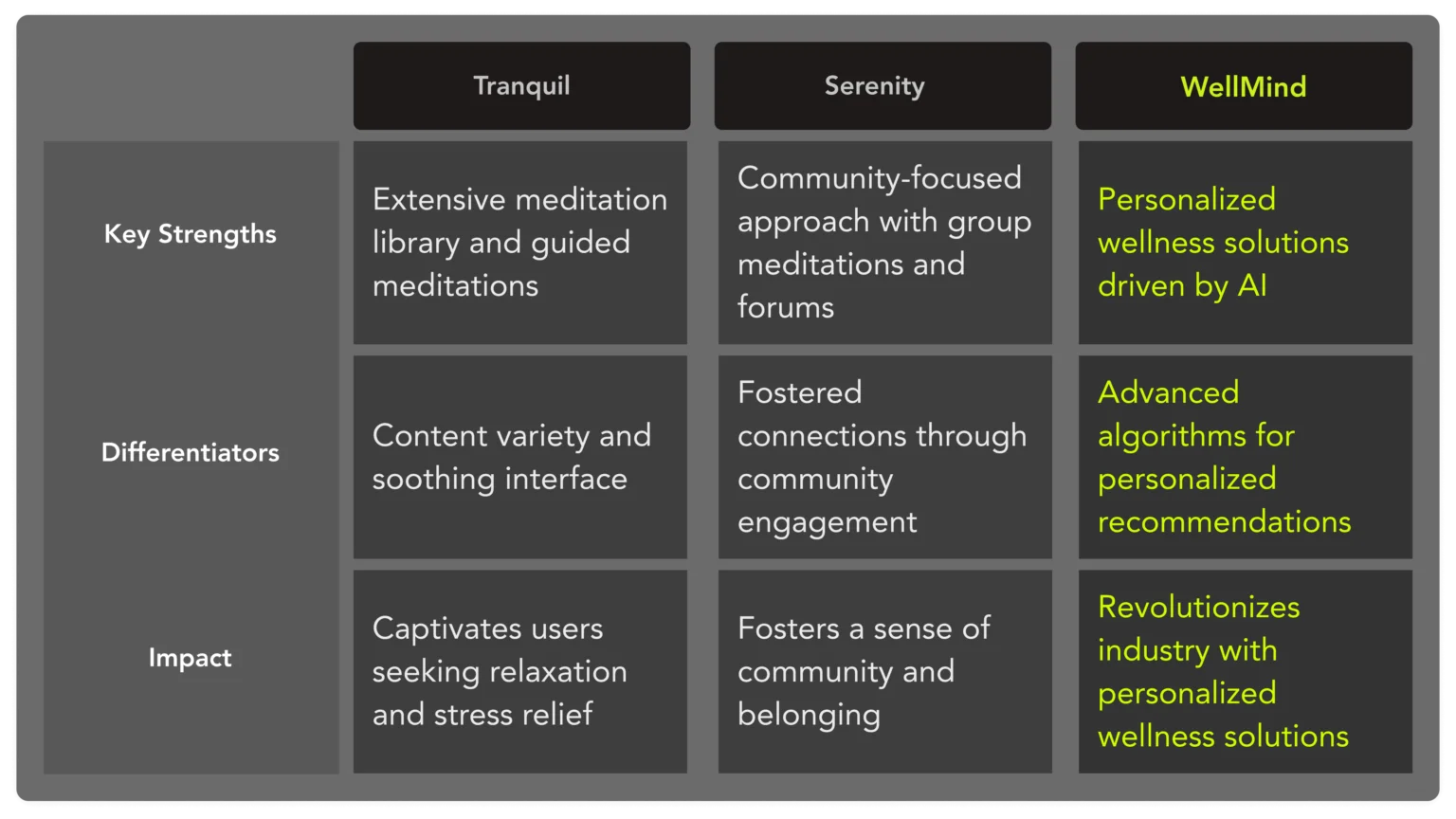
Competitors like Tranquil focused on deep content libraries, while Serenity focused on social wellness.
Both solved parts of the problem but missed a critical need: people do not want to search, they want direction.
WellMind’s edge:
AI driven personalised meditations and recommendations.
The platform adapts to each user, giving them shorter paths, fewer decisions, and more clarity.
This is where WellMind stands out in a crowded space.
Process
Research and Analysis
Reviewed wellness trends, stress behavior, and post pandemic needs.
Insights confirmed that users are tired, busy, and overloaded.
Design must remove friction, not add more screens.
Information Architecture
Created a simple, goal based structure instead of feature based grouping.
This helped first time users connect with the app instantly.
Wireframing and Prototyping
Focused on clarity, predictable flow, and minimal steps per screen.
Prototypes helped validate tone and hierarchy early.
Usability Testing
Testers responded well to the structure.
Navigation clarity improved, and guided paths increased confidence.
Visual Design and Style
Soft gradients, gentle spacing, and supportive language.
Avoided clinical tone and avoided “guru style” messaging.
The design system supports future expansion.
Learning and Reflection
Simple design reduces stress more than complex features.
Mixed testing results highlight what matters most.
Clear language beats inspirational or technical wording.
Designing for a broad audience means staying neutral, calm, and honest.
Why Simplified Language
Why Simplified Language
Wellness users already feel overloaded.
Simple language removes intimidation and encourages action.
It makes the product easier to adopt, especially for beginners.
Conclusion
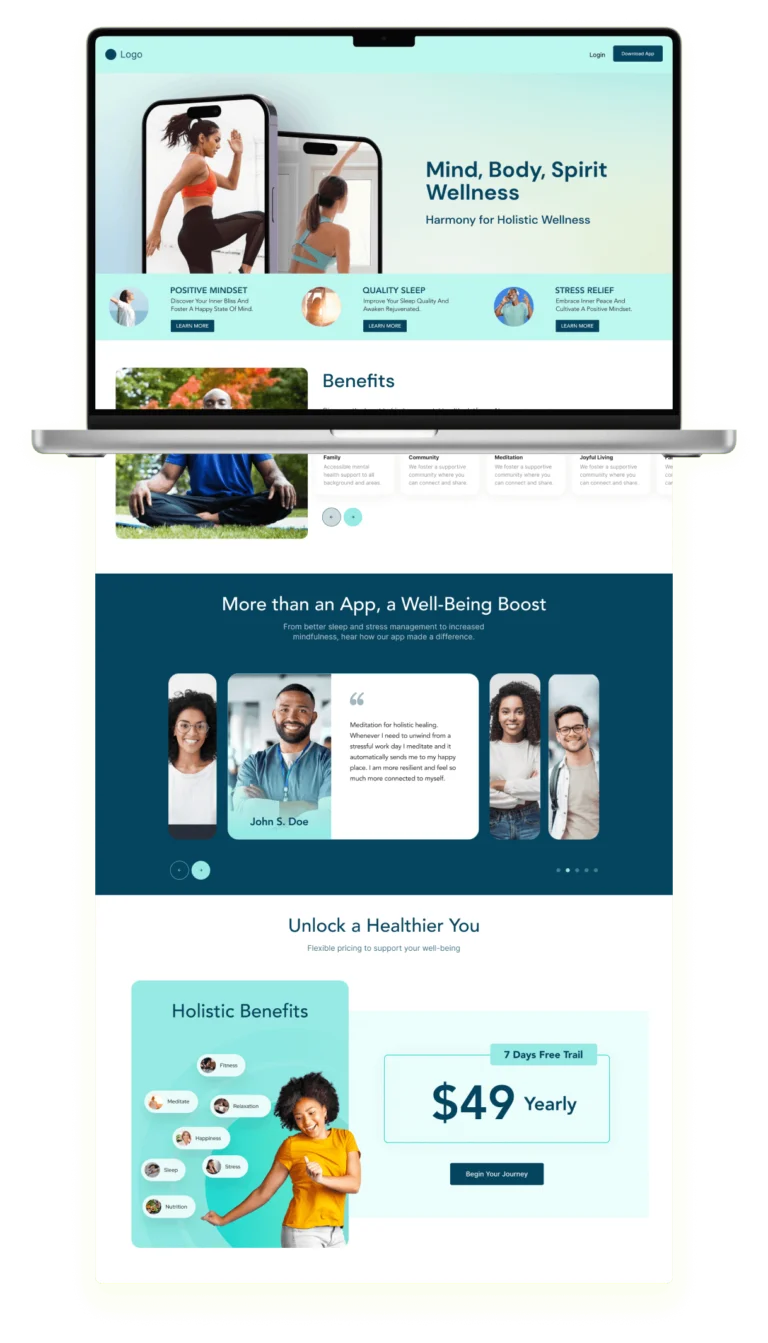
This project shows how to design a product from scratch that respects real emotional and mental states. The WellMind experience is simple. guided. and supportive. It balances UX. behaviour understanding. and technical thinking to build a first version app that users can trust.